

Buying and using a Dutch oven: the complete guide
A Dutch oven is perhaps the most versatile piece of cookware you can take into the great outdoors. Casseroles, bread, soup, even a cake: you can make it all in this cast-iron pot with a lid, simply over an open fire or coals. In this guide, we explain exactly what a Dutch oven is, what to look for when buying one, and how to care for it so that it lasts a lifetime.
What is a Dutch oven?
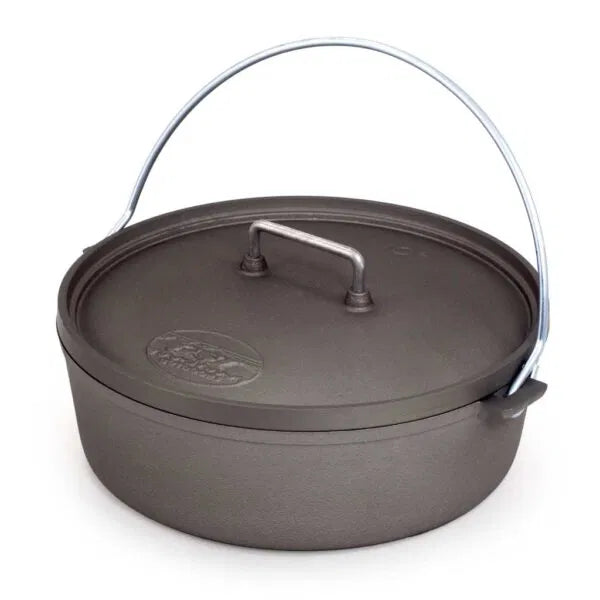
A Dutch oven is a heavy pot with a tight-fitting lid, usually made of cast iron. Its thick material retains heat for a long time and distributes it evenly. Many models have feet and a flat lid with a rim, allowing you to place hot coals on top and use the pot like a real oven, with heat from above and below.
Cast iron or aluminum?
Cast iron is the classic: incredibly sturdy, retains heat fantastically, and lasts for decades. It is heavy, though, which is no problem when car camping, but less convenient when you have to carry everything. An aluminum Dutch oven is much lighter and heats up faster, ideal for those looking to save weight. For the authentic fire-cooking experience and the best results, cast iron remains the favorite.
What size do you need?
Choose the size based on the number of people. For two people, a small Dutch oven of around four liters is enough. If you are cooking for a family or group, six to nine liters will be just right. Not sure? A slightly larger size is rarely a problem, but a pan that is too small can be.
Cooking with charcoal: how it works
The beauty of a Dutch oven with legs is that you use it like an oven. Place coals under the pot and a layer of glowing coals on the lid, and you’ll bake and stew with heat from both sides. As a rule of thumb, place slightly more coals on the lid than underneath for an even temperature. Turn the pot and the lid a quarter turn every now and then for an even result.

Maintenance: burn-in and cleaning
A cast-iron Dutch oven needs a seasoned layer of oil, known as seasoning. This layer makes the pan non-stick and protects it from rust. After use, clean the pan with hot water and as little soap as possible, dry it thoroughly, and rub it with a thin layer of oil. Store it in a dry place. If you do this, your Dutch oven will only get better with age.
Find your Dutch oven
At Outdoor Food you will find dutch ovens in cast iron and lighter versions, in various sizes and with the right accessories. View the dutch oven collection and choose the pot that suits your adventure. Want to complete your outdoor kitchen? Combine it with a stove and good knives.


Almost anything: stews, soup, chili, bread, casseroles, and even cake or apple crumble. Thanks to the even heat, it is ideal for slow cooking, but you can also use it for baking and frying.
For two people, about four liters is sufficient; for a family or group, choose six to nine liters. If you often cook for more people, it is better to choose a larger size.
A cast-iron Dutch oven needs a seasoned layer of oil (seasoning). Many models come pre-seasoned, but continued maintenance is important: rubbing it with oil after cleaning maintains the non-stick coating and prevents rust.
Yes. In addition to an open fire and coals, you can also use a Dutch oven on a gas burner or stove. In that case, use a steady, medium-low flame to ensure the heat is distributed evenly.


